Ready for practice and game day

Flag football gear for players and coaches

Bring what helps your child play and your team learn. Here is what each item does, why it helps, and what to check before buying.

For each player

Comfortable, correctly fitted gear helps a child arrive ready. Make packing it part of learning to take responsibility as a teammate.

Check the playing surface

Cleats or field-appropriate shoes

Athletic footwear with a sole suited to grass, turf or an indoor court.

How it helps
Traction helps a player start, stop and change direction while running a route.
What to look for
Choose a comfortable fit and a sole allowed by the venue. NFL FLAG prohibits metal cleats. Ask before buying if your team plays indoors or on a surface with footwear restrictions.
May be required by your league

Mouthguard, case and spare

A fitted mouthguard worn over the teeth, with a case for storage between uses. Mouthguards are required in the league I coach in. Your league may require one too—confirm its rules before the first practice or game.

How it helps
Protects the mouth during play. A spare helps a forgotten or misplaced mouthguard avoid becoming a missed practice.
What to look for
Follow the maker’s fitting and cleaning instructions. Check your league’s requirements, and ask a dentist about a suitable fit if your child wears braces. Keep each child’s mouthguard personal.
Mouthguards for kids: why I keep it simple →

Optional

Receiving gloves

Football gloves with a gripping palm designed for handling the ball.

How it helps
Extra grip can help a player control a catch. For children who find the ball uncomfortable on their hands, gloves may also make catching feel more approachable. Combine them with gentle, short throws and practice watching the ball, presenting the hands and securing it.
What to look for
Look for a close fit that lets the child open and close their hands comfortably. Try catching with and without gloves; they are a preference, not a requirement for learning to catch.

League-provided · confirm locally

Flag belt and flags

A belt with detachable flags that defenders pull to stop the ball carrier.

How it helps
Gives both teams a clear target for a flag pull and lets children practice the same skill they use in games.
What to look for
Check what registration includes before buying. Use your league’s specified belt and release system; replacement flags are not interchangeable across every system. Fit the belt so the flags stay visible and reachable.

Player clothing

Pocketless shorts and team jersey

Athletic shorts or pants without pockets, plus the practice shirt or jersey your league specifies.

How it helps
Pocketless bottoms keep fingers from catching in pockets during a flag pull. Clothing that leaves the flags exposed makes assignments easier to practice.
What to look for
Confirm whether the league supplies the jersey. Check its clothing and flag-color rules. Dress so the belt and flags are visible; avoid loose layers hanging over them.

Bring every practice

Labeled water bottle

A reusable bottle the child can recognize and open independently.

How it helps
Makes water easy to reach during the breaks the coach builds into practice.
What to look for
Label it with the player’s name, fill it before leaving, and plan for refills. Keep bottles together in a designated area off the playing field.

Comfort and conditions

Athletic socks and weather layers

Socks that fit inside the player’s shoes and clothing appropriate for the day’s weather.

How it helps
Comfortable feet and practical layers help children focus on the drill instead of adjusting their clothing.
What to look for
Try socks on with the shoes the child will wear. Pack a dry pair when conditions call for it. Check uniform rules and keep layers clear of the flags.

Useful extra

Small gear bag

One place for the player’s shoes, mouthguard case, flags and water bottle.

How it helps
Helps children take responsibility for their equipment and arrive ready to join their teammates.
What to look for
Use a bag you already own if it does the job. Label it and have the child help pack it using the same checklist each time.

For teaching and running practice

A few simple tools can make instructions visible and give more children a chance to practice at once. Share team supplies rather than asking every family to buy them.

Teaching essential

Cones and flat field markers

Portable markers for starting positions, boundaries, route breaks and drill stations.

How it helps
Turns an instruction into something a child can see: start here, run to this marker, then make your cut.
What to look for
Use contrasting colors for different jobs. Low-profile markers work well for starting spots; leave running lanes clear. Start with enough to mark one drill, then expand as needed.

Teaching essential

Whistle

An audible signal for stopping a drill and bringing the team’s attention back to the coach.

How it helps
Gives players a clear signal for when the play is over. Teach them to keep running until they hear the whistle rather than stopping because they think the play has ended.
What to look for
Before the drill, practice the cue: keep running until the whistle, then stop, look and listen. I remind my ball carriers: “Run, and don’t look back.” Keep looking ahead toward open space instead of turning to watch a defender chasing you. Receivers still need to look for the pass. Use the whistle from a reasonable distance rather than next to a child’s ear.

Teaching essential

Footballs sized for your age division

Practice balls that match the size and type your league uses on game day. Confirm what the league provides before buying.

How it helps
A ball a child can handle makes it easier to work on the snap, handoff, throwing grip and catch. Several balls let pairs practice at the same time.
What to look for
Ask the league for the exact size or model for each age group you coach. Junior, peewee and youth labels can differ by brand. Match game preparation to the required ball; clearly separate any smaller training balls.
Why I practice with the game-day football →

Keep in the coach’s bag

Ball pump, needles and pressure gauge

Tools for checking and adjusting the air in your practice footballs.

How it helps
Keeps a low ball from interrupting a drill and helps the football feel consistent from one practice to the next.
What to look for
Use the pressure range printed on the ball or specified by its maker. Store spare needles in a small container so they do not get lost in the bag.

Useful backup

Spare belts and replacement flags

Extra sets that match the league’s required flag system.

How it helps
Lets a player rejoin practice after a belt is forgotten or a flag attachment fails.
What to look for
Ask what spares the league provides first. Check belt fit, attachment compatibility and condition before practice.

Teaching aid

Clipboard, printed playbook and pencil

A portable way to show the formation, player labels and routes, and keep a short practice plan.

How it helps
Lets a player point to their assignment before walking it on the field. A simple rotation list helps every child get a turn.
What to look for
Print only the plays you plan to teach, with diagrams large enough to read. A reusable sleeve can help keep pages together. Use FlagPlays to build and export your practice playbook.
Build a free printable playbook →

Coach preparation

First-aid kit and team contact plan

A stocked kit kept with the coach, alongside the league’s emergency procedure and a way to reach parents or guardians.

How it helps
Keeps supplies and contact information organized when a player needs help.
What to look for
Confirm the league’s supplies, designated first-aid person and procedures. Check the kit before the season and after use; equipment is not a substitute for appropriate training.

Useful extra

Equipment bag and towel

A bag for team supplies and a towel for wiping moisture from a football.

How it helps
Makes setup and cleanup quicker and keeps small items such as the whistle and pump together.
What to look for
Organize by drill or purpose. Count balls, flags and markers before leaving so the next practice starts with everything ready.

Which size football should I buy?

Start with the age division your child plays in, then get the ball size or model from the league. A label such as “youth” is not enough to assume it matches the game ball. If you coach several age groups, label and separate their balls so each group practices with the right one.

For a beginner handling drill, a smaller ball can let a child focus on the movement. Move back to the division’s required ball when practicing for games. You do not need every size for one team.

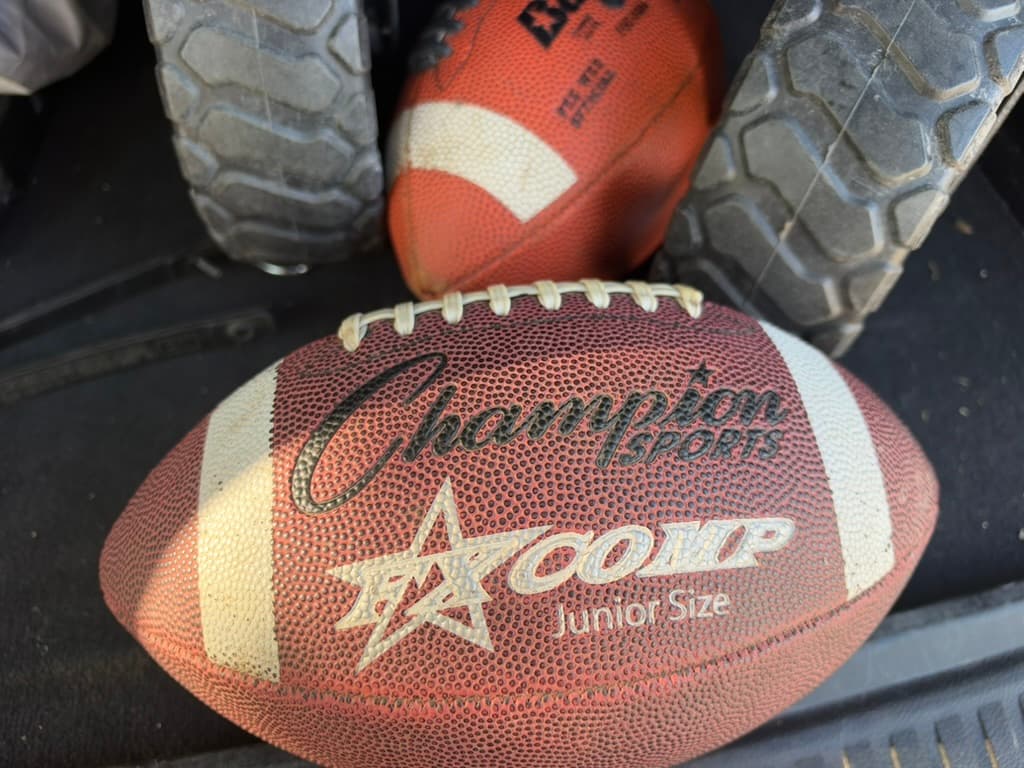
Our Champion Sports practice football with Junior Size printed on the ball.
Our current practice football, in junior size. A year or two ago, we used a peewee-size ball.
Read the coaching note: practice with the game-day football →

Before you leave for the field

I always remind my kids to use the bathroom before we leave for the field. Making it part of the routine helps cut down on time away from practice or the game.

Player’s bag

  • Approved shoes, socks and pocketless uniform bottoms
  • Mouthguard and case; a personal spare if available
  • League belt, flags and jersey
  • Filled, labeled water bottle
  • Optional gloves and weather layers

Coach’s bag

  • Correct-size footballs, pump and gauge
  • Cones, markers and whistle
  • Spare compatible flags and belts
  • Practice plan, playbook and pencil
  • First-aid supplies, contact plan and towel

For outdoor sessions, plan water breaks and access to shade, and coordinate weather and sun-protection preparations with families under your league’s guidance.

Gear packed? Teach your first play →