Gear notes · Footballs
Practice with the Football You Use on Game Day
Find out what your league uses, then give your players time to throw and catch that same kind of football.
By FlagPlays ·
A coaching perspective from the creator of FlagPlays.
One of the first things I want to know before practice is which football we will use in games. The league will not always provide a practice ball, so ask for the size and type before buying one. In my league, we use a junior-size football. Your league may use something different, so start with its answer.
My priority is simple: practice throwing and catching with a football that matches the game ball. I want the children to recognize how it feels in their hands when game day comes.
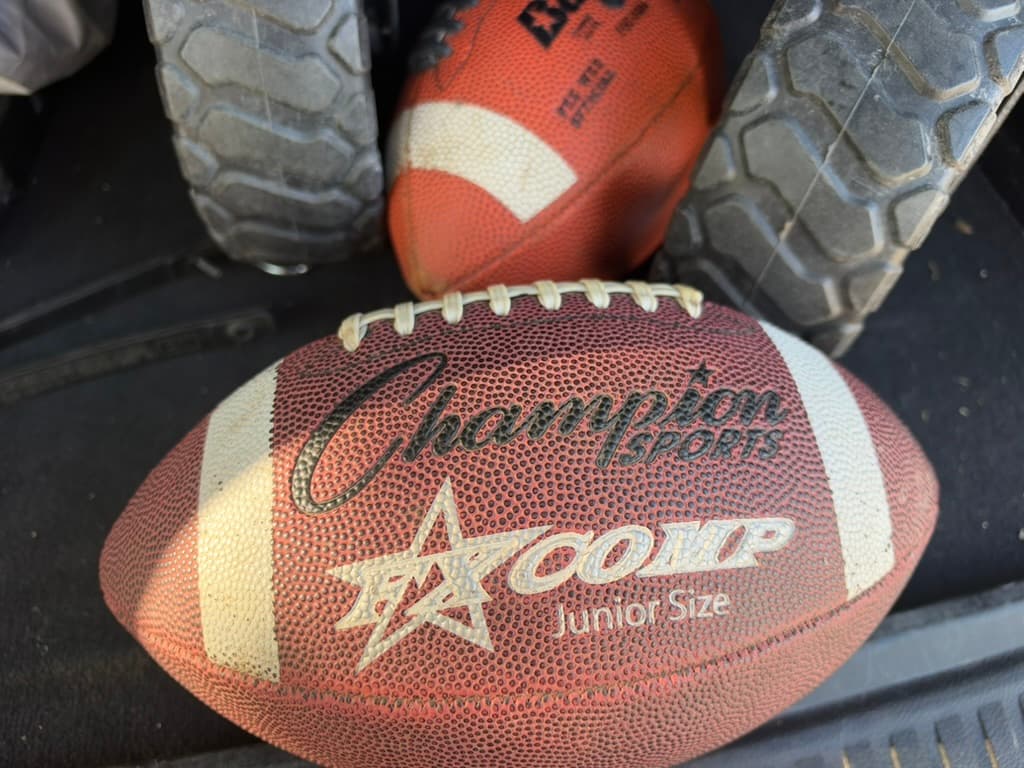
Moving from peewee to junior is a good reminder to check what your team uses this season rather than assuming the ball from a previous season is still the right size.
Small hands make throwing a different challenge for every child
You might coach eight-, nine-, ten- or eleven-year-olds, or a mix of those ages. One player may be able to grip and throw the ball comfortably while another struggles to get their hand around it. Being on the same team does not mean they are starting with the same hands or the same experience.
That is why I want to spend time teaching each child how to throw. We need a ball that matches what they will use in the game, with a grip and feel they can get familiar with. If we only practice with a different size, some of that practice time gets spent learning a ball they will not actually be throwing on game day.
Start close together, give each player time to find their grip, and work on short throws before asking for more distance. A player who finds it difficult needs patient repetitions. I do not assume that because one child can throw it, everyone else should already be able to do the same.
Catching needs that same familiarity
If a child practices catching a smaller football and then gets a bigger one in a game, the catch can feel very different. Their hands have to handle a ball they have not spent much time with. Going from a bigger practice ball to a smaller game ball can also take an adjustment.
There is already plenty to think about during a game: running the route, looking for the pass and knowing where the defenders are. I want the size and feel of the football to be familiar so players can focus on those skills.
For your first season, start with the league
If this is your first time coaching or playing, I recommend buying a ball through the league if that option is available. It is a straightforward way to get the right one. If you have done this before and know which ball your team uses, find that football and have it ready for practice.
Get the exact size and model instead of choosing from the age label alone. My league’s junior-size football is an example from our team, not a size recommendation for every child or every league.
Invite players to bring a football to practice
Sometimes I invite the kids to bring their own footballs if they have one that matches what we use in games. That gives us multiple balls to work with without me having to provide all of them. Bringing a ball is optional; players can share.
With more footballs, we can split into pairs or small groups and get more throwing and catching repetitions in the same amount of time. Instead of everyone waiting for one ball to come back, more children can practice at once.
Make time for a few throws during the week
Many of us start coaching because our son, daughter, nephew or another child in the family is playing. That can give us a chance to practice together between team practices and game day.
Use the same size and type of football for those short sessions. Spend a little time on the grip, a few comfortable throws and catching the ball. Those familiar repetitions give you a chance to see what the child finds difficult and work on it together before the next game.
You do not need a collection of different footballs to get started. Find out what your team uses, get a matching practice ball, and give your players time to learn with it. See the football checklist or the full gear guide for players and coaches for the rest of your practice bag.